Post
The Right T-Shirt Size Guide: A Complete Fit Guide
Jun
The Right T-Shirt Size Guide: A Complete Fit Guide
Why Getting Your T-Shirt Size Right Matters More Than You Think
The wrong t-shirt size can undermine even the most expensive outfit. A tee that is too small stretches across the chest and pulls at the shoulder seams. One that is too large creates formless excess fabric that reads as careless rather than relaxed.
Finding your correct t-shirt size is a five-minute process that permanently improves every tee purchase you make from that point forward. This guide walks through exactly how to measure yourself, how to interpret size charts, and how to choose between different fit options for different styling goals.
At codai.click, we provide detailed size guides for every product in our collection. T-Shirt Size Guide. Browse our full range with confidence at codai.click/shop.
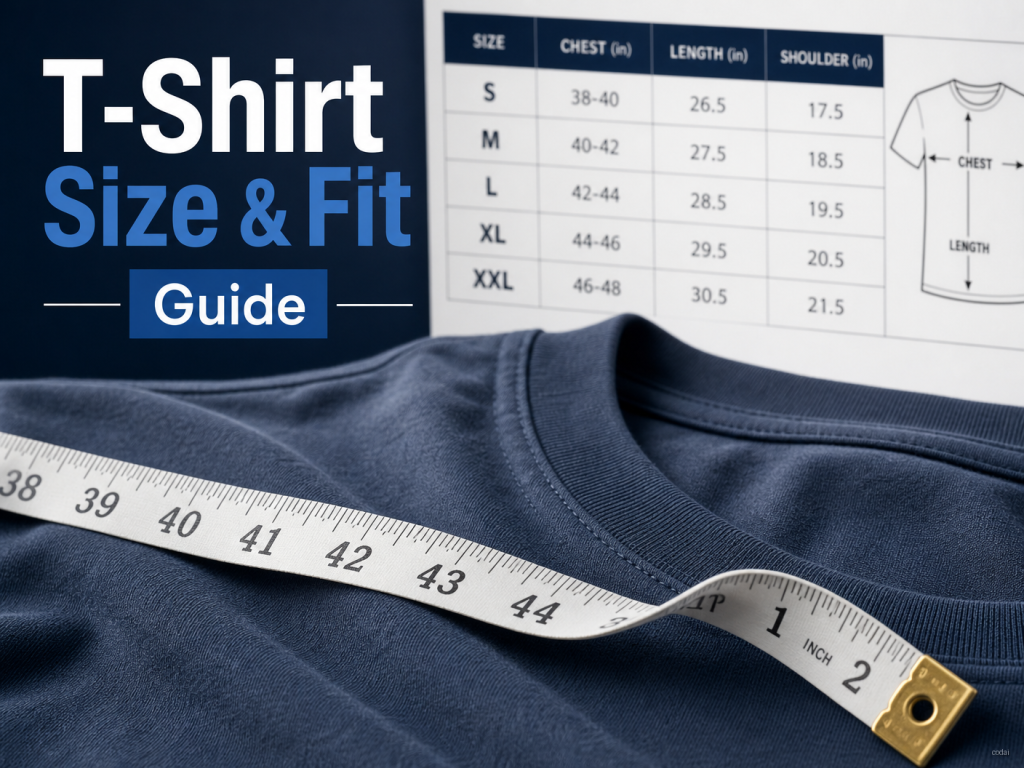
The Three Measurements You Need Before Buying Any T-Shirt
Three specific body measurements determine the right t-shirt size for any individual: chest circumference, shoulder width, and body length from shoulder to desired hem position.
To measure your chest circumference, wrap a flexible measuring tape around the widest part of your chest — T-Shirt Size Guide typically across the nipple line for men and across the fullest part of the bust for women. Keep the tape parallel to the floor and take the measurement while breathing normally without pulling the tape tight.
For shoulder width, measure from the outer edge of one shoulder (where the shoulder joint ends) across the back to the outer edge of the other shoulder. This measurement is critical for ensuring the shoulder seam of the tee falls at the correct position on your body.
Body length is typically measured from the top of the shoulder to the desired hem position. Standard t-shirt length falls approximately at the trouser waistband. Longer tees T-Shirt Size Guide extend to mid-hip and are better suited for relaxed or untucked styling. This measurement is particularly useful for taller individuals who frequently find standard sizing too short.
How to Read a T-Shirt Size Chart Correctly
Size charts typically list measurements in either centimetres or inches and refer to either the garment measurements (what the shirt itself measures when laid flat) or the body measurements the shirt is intended to fit.
When size charts list garment measurements, add between five and ten centimetres to your chest measurement for a regular-fit tee and two to three centimetres for a slim-fit tee. T-Shirt Size Guide. This allows for comfortable movement without excess fabric.
When size charts list body measurements, choose the size where your actual chest measurement falls within the listed range for that size. Our size charts at codai.click list body measurements to make this selection process as direct and accurate as possible.
The international history of t-shirt sizing standards and how they have evolved is covered thoroughly in the Wikipedia entry on t-shirts, which explains how sizing conventions developed differently across different countries and production eras.
Understanding Slim, Regular, and Relaxed Fits
The three primary t-shirt fits — slim, regular, and relaxed — each serve different body types and styling purposes. Understanding the technical differences helps you choose the right fit for every purchase.
A slim-fit tee is cut with one to two inches of ease (extra space beyond your actual measurement) across the chest. It follows the body’s contours closely and creates a tailored, defined silhouette. Slim fit works best for athletic or lean builds and for styling under blazers or structured outerwear.
A regular-fit tee has approximately three to four inches of ease. It sits away from the body without excess fabric and creates a clean, balanced silhouette that works across most body types. This is the most versatile and universally flattering fit option.
A relaxed-fit tee has six or more inches of ease and a dropped shoulder seam that typically falls one to two inches below the natural shoulder point. It creates a loose, casual silhouette that is comfortable and visually impactful in the oversized aesthetic that has dominated casual fashion.
Common Sizing Mistakes and How to Avoid Them
Several common mistakes cause customers to consistently buy the wrong t-shirt size. Identifying these patterns helps you break the cycle of tees that never quite fit correctly.
Buying based on the label alone is the most common error. Sizing varies significantly between brands — a medium in one brand’s regular fit may equal a small in another brand’s relaxed fit. Always compare your measurements against the specific size chart for each product you consider purchasing.
Ignoring shoulder seam placement is the second most common mistake. The shoulder seam should sit precisely at the natural shoulder point — not drooping over the upper arm and not pulling up toward the neck. This single measurement check prevents most fit failures in t-shirt shopping.
Not accounting for pre-shrunk versus unshrunken fabric is a third frequent issue. Cotton t-shirts shrink between three and eight percent in the first wash if they have not been pre-treated. Our tees at codai.click are pre-washed to eliminate first-wash shrinkage entirely.
Tips for Buying T-Shirts Online Confidently
Online t-shirt shopping has a higher potential for sizing errors than in-store purchasing simply because you cannot physically try the garment before buying. These strategies minimize that risk significantly.
Take your measurements before starting any shopping session. Having your chest, shoulder, and length numbers available makes size chart comparisons fast and reliable.
Read customer reviews specifically mentioning sizing. Reviews that describe whether a tee runs large, small, or true to size provide valuable real-world calibration data beyond the official size chart.
Check the return and exchange policy before completing any purchase. Our policy at codai.click ensures that sizing errors are always easily resolved without friction.
Special Considerations for Tall and Petite Buyers – T-Shirt Size Guide
Standard t-shirt sizing assumes an average height in the range of one hundred and seventy to one hundred and eighty centimetres. Buyers outside this range frequently find that standard sizing fails them in specific ways.
Taller buyers typically find that standard large and extra-large tees have sufficient chest and shoulder width but insufficient length, resulting in a tee that exposes a gap above the trouser waistband when arms are raised. Our long-body sizing options address this directly with added length at no change to chest or shoulder width.
Petite buyers often find that small and extra-small tees are still too wide in the shoulders and too long in the body for their proportions. Our fitted options in smaller sizes are cut with proportionally adjusted shoulder widths and shorter body lengths to serve petite frames correctly.
Conclusion: Know Your Measurements, Own Your Fit
Five minutes spent measuring yourself correctly eliminates years of sizing frustration. Every t-shirt you buy from that point forward will be a better purchase — one that fits correctly, looks intentional, and delivers the styling value you are paying for.
Use our detailed size guides at codai.click to find your perfect fit across our entire collection and shop with total confidence that what arrives will work for you from day one.
