
Post
Custom T-Shirt: Your Complete Guide to Creating a Design From Scratch
Jun
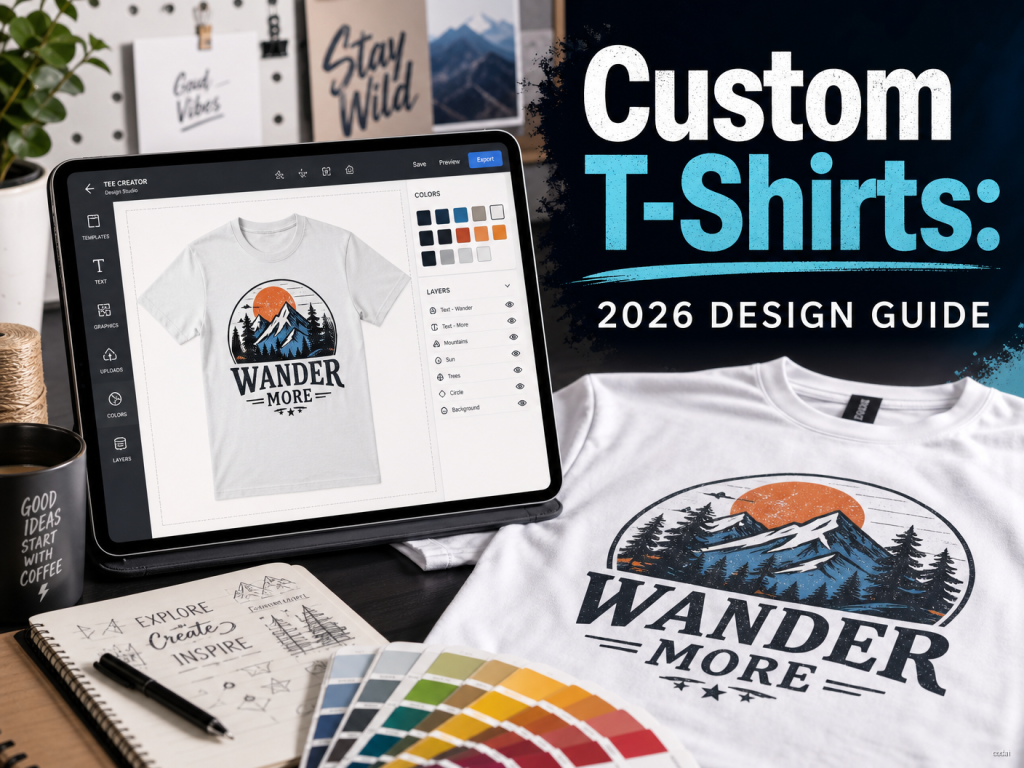
Custom T-Shirts: Your Complete Guide to Creating a Design From Scratch
Why Custom T-Shirts Have Become a Mainstream Choice
The custom t-shirt industry has grown dramatically over the past decade as design technology, print-on-demand services, and accessible design tools have lowered the barriers to creating personalised garments for individuals, groups, and organisations of every size.
Whether you are creating a custom tee for a personal project, a team event, a brand launch, or a meaningful gift, understanding the design and production process produces dramatically better results than approaching it without preparation. This guide covers every stage of the custom tee creation process from design concept to finished product.
For premium base tees that support outstanding custom printing results, browse our selection at codai.click/shop.
Starting With a Clear Brief: The Foundation of Good Custom Design
Every successful custom tee project starts with a clear brief that defines the purpose, audience, message, and aesthetic direction before any design work begins. Skipping this foundational step is the most common cause of unsatisfying custom tee outcomes.
Define the purpose of the tee first. Is it a commemorative item for a specific event? A brand statement piece? A team identity garment? A personal expression project? The purpose determines every design decision that follows.
Define the audience second. Who is going to wear this tee? What do they value aesthetically? What message will resonate with them? A tee designed for a corporate team event requires a very different visual approach from one designed for a youth sports team or a personal art project.
Define the aesthetic direction third. Is the design minimalist or maximalist? Typographic or illustrative? Contemporary or retro-inspired? Specific or abstract? Establishing this direction before approaching any design tool prevents the directionless experimentation that wastes time and produces mediocre results.
Design Principles That Make Custom Tees Work
Custom t-shirt designs fail most frequently for one of three reasons: too much custom t-shirt visual complexity, poor color choices, or inappropriate scale. Understanding these failure modes helps you avoid them.
Visual complexity is the most common issue. A design that works as a digital file on screen often fails when transferred to fabric at t-shirt scale. Details that appear crisp at high digital resolution become muddy and indistinct when printed at wearable size. The best custom tee designs use bold, clear visual elements with sufficient contrast to read clearly at the distances at which clothing is typically viewed.
Color choice for custom tees requires considering how colors interact at print scale on your chosen fabric. High-contrast color combinations — dark on light or light on dark — produce the clearest, most impactful results in most print techniques. Multi-color designs with complex gradients are best executed through DTG printing, while bold flat-color designs are typically better served by screen printing.
Scale is frequently underestimated by first-time custom tee designers. A design that appears appropriately sized on a flat art file often appears too small when printed on an actual garment. The printable chest area on a standard t-shirt is approximately thirty to thirty-five centimetres wide — design to fill this area confidently rather than placing a small graphic in the centre of a large expanse of fabric.
The evolution of the t-shirt as a medium for personalised artistic and cultural expression is explored thoroughly at the Wikipedia article on t-shirts.
Choosing the Right Base Tee for Custom Printing
The quality of the base tee determines the final result of any custom printing project as much as the design itself. Cheap custom t-shirt base tees produce poor print results regardless of print quality — the fabric’s roughness, inconsistency, and tendency to distort during washing degrades even excellent print work rapidly.
For premium custom results, start with a one hundred percent combed ring-spun cotton base tee in the one hundred and sixty to one hundred and eighty gsm range. The smooth, consistent surface of high-quality combed cotton provides an ideal print substrate for both screen printing and DTG techniques.
Avoid cotton-polyester blends for custom t-shirt DTG printing specifically — the reduced cotton content significantly reduces ink adhesion and print vibrancy in direct-to-garment applications. For screen printing, blends are more acceptable but still produce inferior results to all-cotton alternatives.
Working With a Designer vs Designing Yourself
The choice between working with a professional graphic designer and creating the design yourself depends on your design skills, the complexity of the vision, and the importance of the outcome.
For personal projects, group tees, and occasions where the process itself has value, self-designed custom tees are entirely appropriate. Numerous accessible custom t-shirt design tools — Canva, Adobe Express, and specialized t-shirt design platforms — provide templates and design elements that produce acceptable results without professional design skills.
For brand-critical applications, high-visibility events, and any context where the design quality reflects on an organisation’s reputation, working with a professional graphic designer custom t-shirt produces significantly better results. A professional brings both design skill and print production knowledge that non-specialists typically lack.
Ordering and Production: What to Check Before You Confirm
Before confirming any custom tee order, verify several specific items to prevent expensive and time-consuming mistakes.
Confirm the print file specifications required by your chosen printer. File format, resolution, color mode (CMYK for screen printing, RGB for DTG), and bleed requirements vary between print services and must be matched precisely for the best results.
Request a physical print proof or digital mockup custom t-shirt before authorizing production on quantities above ten units. A proof confirms that the design translates correctly from digital to physical and allows corrections before the full production run.
Confirm delivery timelines explicitly. Custom production typically requires more lead time than standard retail orders — factor this into your planning to avoid rushed production that compromises quality.
Conclusion: Great Custom Tees Start With Great Planning
A custom t-shirt created custom t-shirt with a clear brief, strong design principles, and a quality base garment is an outstanding personal or organisational asset that delivers lasting value. Apply the principles in this guide to your next custom tee project and the result will exceed most self-designed custom alternatives by a significant margin.
Start with the best base tees available — shop our premium cotton collection at codai.click and give your custom design the foundation it deserves.
