
Post
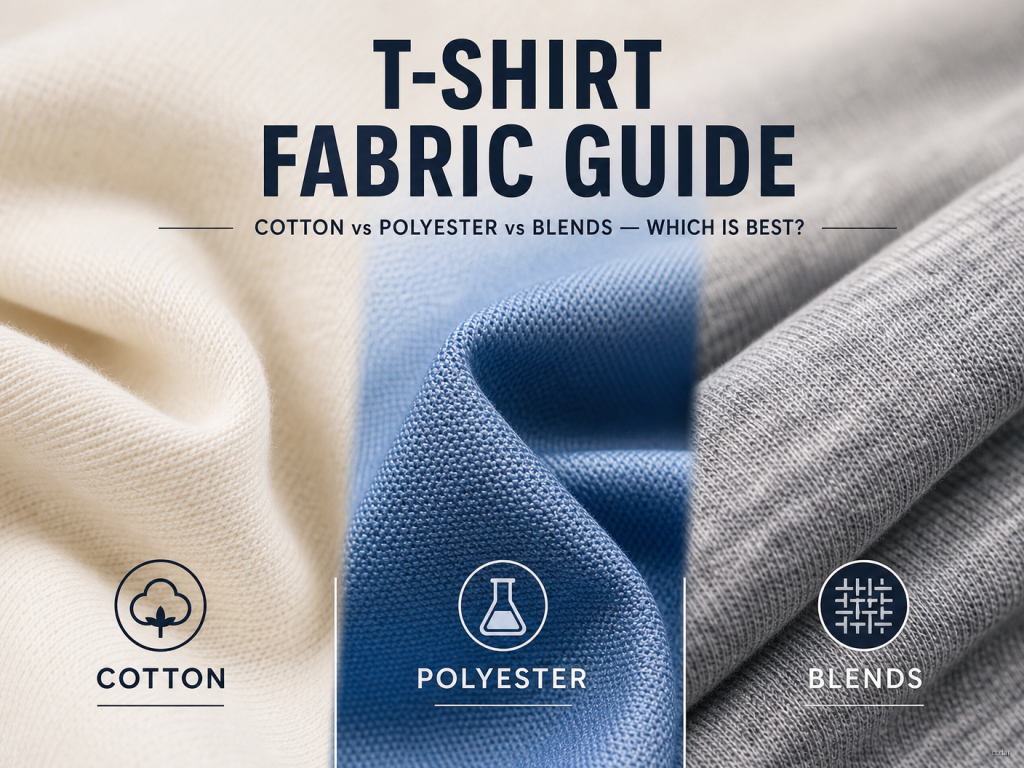
T-Shirt Fabric Guide: Cotton vs Polyester vs Blends — Which Is Best?
Jun
T-Shirt Fabric Guide: Cotton vs Polyester vs Blends — Which Is Best?

Why T-Shirt Fabric Is the Most Important Decision You Will Make
The fabric of a t-shirt determines everything that matters about wearing it: how it feels against your skin, how it handles heat and moisture, how it looks after washing, and how long it lasts in regular use. Understanding fabric options before you buy prevents costly mistakes and helps you invest in tees that genuinely serve your specific needs.
At codai.click, we primarily use premium ring-spun cotton for our tee collection because the evidence for cotton’s superiority in everyday casual wear is clear. Explore our fabric quality across the full range at codai.click/shop.
Cotton: The Natural Choice for Comfort and Quality
Cotton is the dominant t-shirt fabric globally because it delivers the most satisfying combination of comfort, breathability, and natural feel for everyday casual wear. The cotton plant’s cellulose fibers absorb moisture, breathe naturally, and feel inherently soft against skin — qualities that no synthetic fabric has successfully replicated despite decades of development.
Standard cotton is available in several quality grades. Open-end spun cotton is the most common commercial grade — produced quickly and inexpensively but resulting in a rougher, weaker fiber. Ring-spun cotton is the premium standard — spun more slowly to produce a stronger, smoother fiber with noticeably superior softness. Combed cotton takes this further by removing short fiber fragments and impurities before spinning, creating the softest and most uniform cotton fabric available.
The primary limitation of cotton is its tendency to shrink, wrinkle, and retain moisture during physical activity. These are manageable limitations for everyday casual wear but can be significant issues for athletic or performance applications.
Polyester: Performance Without Natural Comfort
Polyester is a petroleum-derived synthetic fiber that offers specific performance advantages over cotton in athletic and high-activity contexts. It is lighter than cotton at equivalent thickness, moisture-wicking in technical formulations, resistant to wrinkles, and highly colourfast through repeated washing.
For athletic t-shirts, training wear, and performance apparel, polyester or high-polyester blends are the technically superior option. The moisture-wicking properties of technical polyester actively move sweat away from the skin, reducing the clammy, uncomfortable feeling that cotton produces during intense physical activity.
However, for everyday casual wear, polyester’s limitations are significant. It lacks cotton’s natural breathability, can feel synthetic and uncomfortable against skin in non-athletic contexts, and retains odor compounds more readily than cotton — requiring more frequent washing at higher temperatures to stay fresh.
The environmental profile of polyester is also considerably worse than cotton. It is produced from non-renewable petroleum resources, does not biodegrade, and releases microplastic particles with every wash cycle that enter and accumulate in water systems worldwide.
Cotton-Polyester Blends: The Middle Ground
Cotton-polyester blends attempt to combine cotton’s comfort with polyester’s durability and wrinkle resistance. The most common blend ratios are fifty-fifty, sixty-forty, and sixty-five-thirty-five cotton to polyester.
Blends do successfully reduce shrinkage compared to pure cotton alternatives — a meaningful practical benefit for customers who prefer machine washing and drying without careful temperature management. They also wrinkle less than pure cotton and are slightly more durable in terms of fabric wear resistance over extended use.
The trade-off is reduced breathability and a slightly synthetic hand feel that most consumers find noticeably different from premium pure cotton. For customers who prioritize maximum comfort and natural feel, the blend’s improved practicality does not offset the comfort reduction.
Tri-Blend Fabrics: Softness and Drape
Tri-blend t-shirt fabric typically combines cotton, polyester, and rayon (viscose) — often in ratios around fifty percent cotton, twenty-five percent polyester, and twenty-five percent rayon. The rayon addition produces an exceptionally soft, lightweight fabric with a distinctive vintage-style drape that many customers describe as the most immediately comfortable t-shirt fabric they have experienced.
Rayon is derived from cellulose — typically wood pulp — making it more natural in origin than polyester but less natural than cotton. It is significantly softer than cotton but considerably more delicate, requiring more careful washing and handling to prevent distortion and pilling over time.
Tri-blend tees are best suited for customers who prioritize immediate softness and drape over long-term durability and straightforward care. They are particularly popular in vintage-inspired and relaxed-casual styling contexts.
The history of how different t-shirt fabrics developed and displaced each other over the garment’s history is covered in detail at Wikipedia’s comprehensive t-shirt entry.
Specialist Fabrics: Modal, Bamboo, and Linen
Several specialist fabric options have gained traction in the premium t-shirt market over recent years. Each offers specific advantages that make them worth considering for particular use cases and customer preferences.
Modal is a semi-synthetic fabric derived from beech wood pulp. It is exceptionally soft, resistant to shrinkage, and maintains its shape and color through extensive washing better than cotton alternatives. Modal is significantly more expensive than cotton, making it most appropriate for core everyday basics where its superior durability justifies the premium.
Bamboo-derived fabric offers natural antibacterial properties, excellent breathability, and exceptional softness comparable to modal. It is marketed as sustainable due to bamboo’s rapid growth rate, though the chemical processing required to convert bamboo into fabric somewhat undermines its environmental credentials.
Linen and linen-cotton blends offer outstanding warm-weather breathability and develop a characteristic softened texture with washing that many customers find highly appealing. Linen’s natural texture and slight irregularity give linen-blend tees a distinctive visual character absent from smooth cotton alternatives.
Choosing the Right Fabric for Your Needs
The best t-shirt fabric for any individual depends on their specific priorities. For everyday casual comfort and quality, premium combed ring-spun cotton is the clear choice — it delivers the best combination of feel, breathability, and long-term value. For athletic and performance use, technical polyester or high-polyester blends are the technically superior option. For maximum softness and drape at a premium price point, modal or tri-blend fabrics are worth considering.
Browse our complete fabric range at codai.click/shop and find the specific combination that matches your preferences and priorities most accurately.
Conclusion: Know Your Fabric, Improve Every Purchase
Understanding t-shirt fabrics transforms your buying decisions from guesswork into informed choices. Every tee you buy from this point forward will be a better fit for your actual needs because you know exactly what the fabric composition means for your wearing experience.
